As of July 24, 2026, our Ethereum strategy portfolio was valued at $3,330, up 1.59% week over week. Despite the weekly recovery, the portfolio remains down -38.70% year to date and -71.83% below the all-time high reached in September 2025.
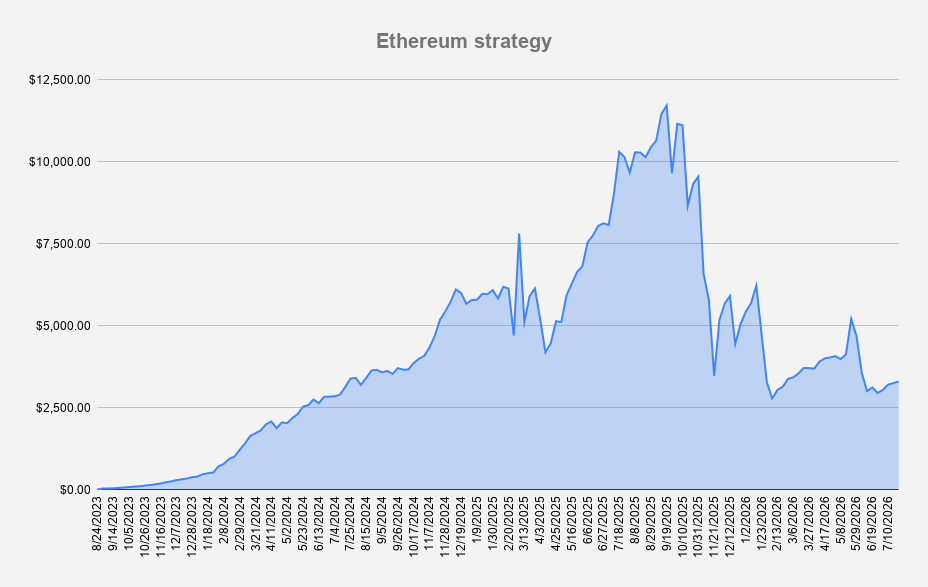
Based on our performance tracking, the strategy is slightly underperforming Ethereum itself, which is down approximately -36.36% year to date.
Closing an ETH Covered Call Position / Opening New Put
This week, ETH reached and exceeded our $1,875 strike price. Instead of rolling the covered call forward and higher, we decided to close the position and realize the profit.
Since opening the position on June 5, we earned $551.85 over 49 days, representing a return of approximately 26.39%.
Under normal circumstances, we would have continued rolling the position forward and gradually increasing the strike price. However, one of our core policies is to direct part of the trading income back into the TerraM token ecosystem. With the TerraM token recently trading near $0.50 per token, we decided to realize the profit and allocate 50% of it to TerraM treasury operations.
To maintain exposure to the ETH options strategy, we opened a new weekly put position with lower $1,850 strike price.
- 1.4 ETH Jul 31, 2026 1,850 Cash - Secured put @30.07
The total premium collected this week was $42.19. The break-even price is $1,819.30, with a potential return of 1.65% over seven days if the puts expire worthless.
This trade carries more risk than our usual approach. At the time of opening, the option delta was approximately -0.36, indicating a relatively high probability of assignment by expiration.
Still, because the previous profit has already been realized and partially distributed, and because acquiring ETH at $1,850 would not materially change the fundamental structure of our portfolio, we are comfortable accepting this risk.
This week, we also increased the total contract size to 1.4 ETH. If the puts are assigned next week, we will be required to purchase 1.4 ETH for a total of $2,590.
This would leave us approximately $332 short of the required cash balance. In that scenario, we would temporarily use brokerage margin, take delivery of the ETH, switch back to selling covered calls, and use the generated option income to gradually repay the margin balance.
TerraM token
The profit distributed back to the TerraM token ecosystem was divided equally between two treasury operations.
We used 25% of the realized profit for TerraM token buybacks, helping lift the token price from approximately $0.50 to $0.78—a significant increase.
The remaining 25% was used to provide additional TerraM/USDC liquidity to the Raydium pool. As a result, the TerraM price increased substantially while the pool’s liquidity depth remained broadly unchanged.
Our short-term goal is to stabilize the TerraM token price at approximately $2 per token while maintaining liquidity equal to at least 10% of the token’s market value.
Reaching this target will depend on several factors. Recently, TerraM has experienced increased volatility due to more active trading by automated bots on the Solana network. At the same time, overall trading activity in the token has also increased.
From our side, the main priority is to continue redistributing profits generated by the ETH options strategy back into the TerraM ecosystem.
This follows a complete wheel cycle:
Sell put options → accept assignment if necessary → sell covered calls → close the position at a profit → redistribute part of the realized profit back into TerraM through token buybacks and additional liquidity.
Solana Covered Call Fund
The Solana strategy increased by 10.63% week over week. NAV per unit increased tot $0.33. The fund’s growth was partly driven by the increase in the TerraM token price, as a portion of the Solana fund’s assets is held in TerraM tokens.
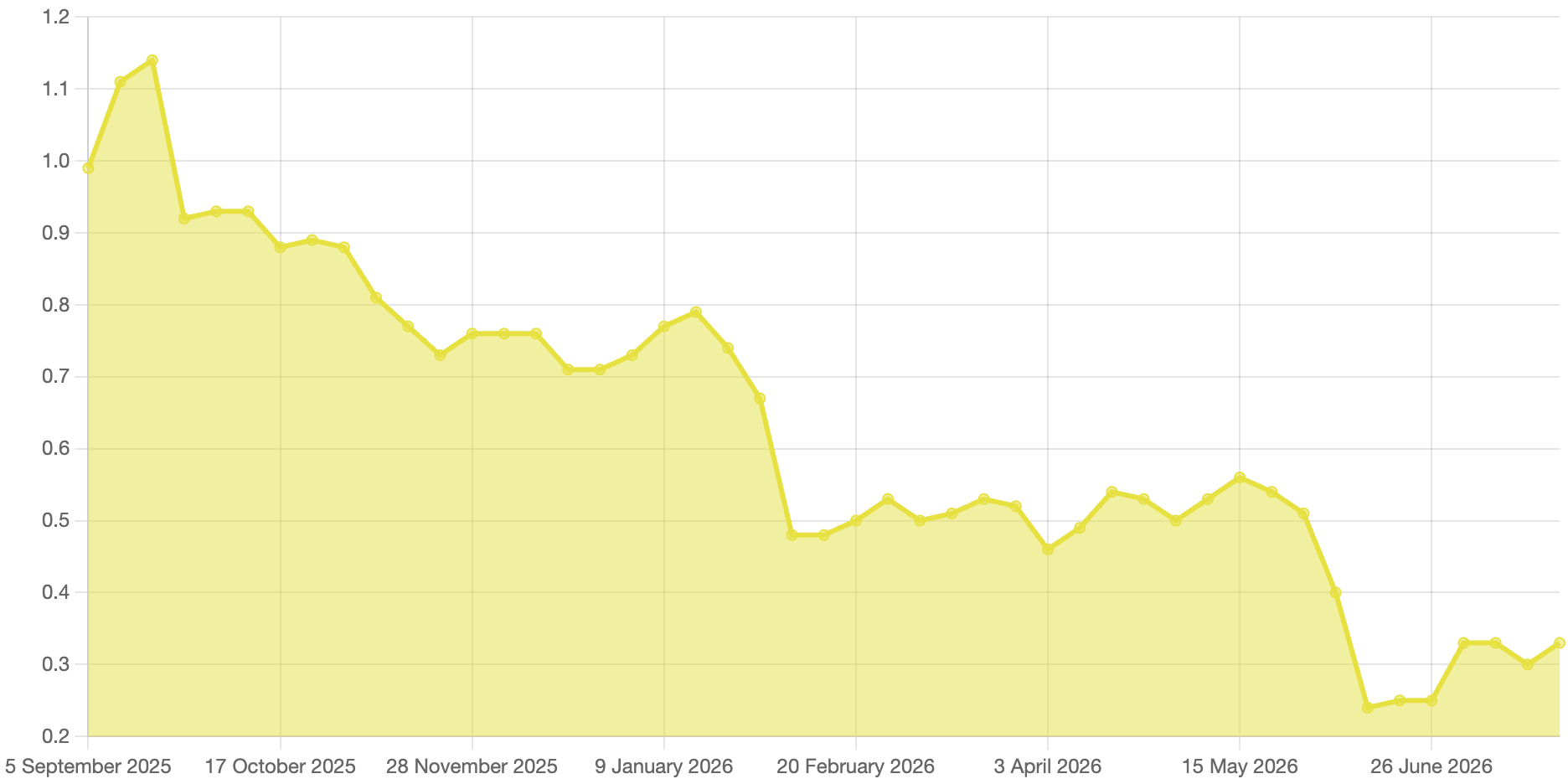
By the end of the week, our long spot position stood at 85.16 SOL, with an average purchase price of $151.81 and a break-even price of approximately $132.66. With Solana trading near $75 at the time of writing, the position remains significantly underwater.
During the week, we collected a modest options premium of $3.11 by selling four covered calls expiring on August 28, 2026. Due to SOL’s recent underperformance, we are writing calls against only a small portion of the position rather than the entire holding, preserving greater upside exposure in case of a strong market rebound.
The Solana strategy is down -55.39% year to date, compared with a decline of approximately -39.28% for SOL itself. The underperformance reflects not only the decline in SOL but also losses associated with the TerraM allocation.
1 DTE ETH Trading bot
After a pause of approximately two months, we restarted our automated 1-DTE ETH options trading bot.
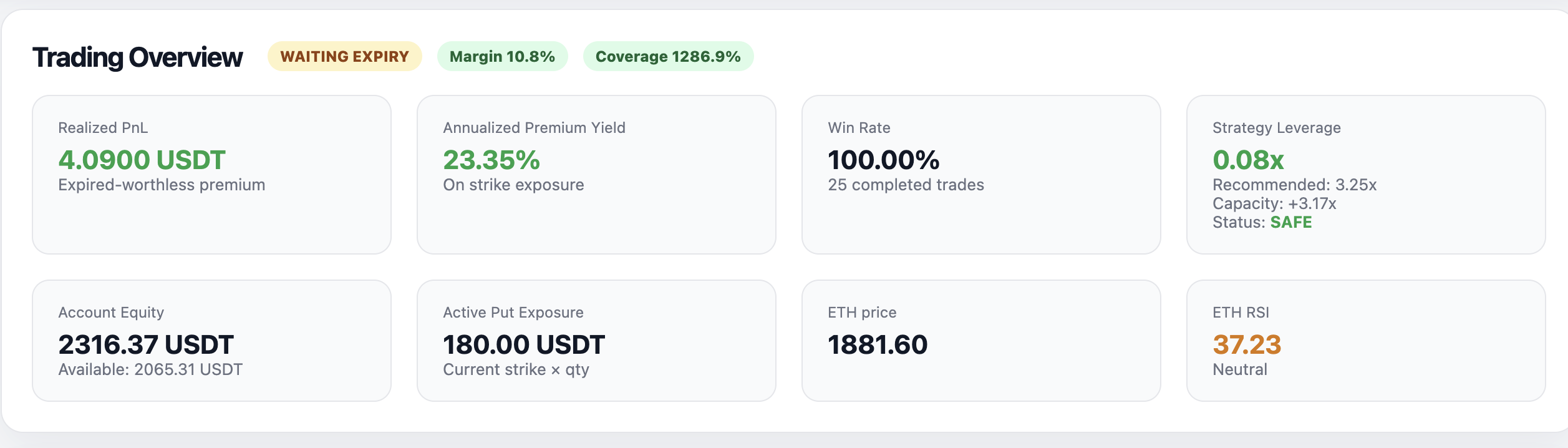
The bot is currently trading a relatively small position of 0.1 ETH. Since it launch, it has completed 25 trades with a 100% win rate. While this is an encouraging result, the track record remains limited, and past performance does not eliminate the risk of future losses or assignment.
The bot operates as part of our broader ETH options strategy. It automatically scans the ETH options market for put options with approximately one day remaining until expiration and generally targets high-probability contracts with a delta no lower than approximately -0.06.
A delta near -0.06 suggests that the option is relatively far out of the money and has a comparatively low probability of expiring in the money. In exchange for accepting the obligation to purchase ETH at the selected strike price, the bot collects an option premium.
The strategy follows a straightforward cycle:
Sell a 1-DTE ETH put → collect the premium → allow the option to expire if ETH remains above the strike → open another qualifying trade.
If ETH falls below the strike price and the position is assigned, our plan is to acquire the corresponding amount of spot ETH and transition to selling covered calls against it. This allows the 1-DTE bot to operate as an entry component within our broader ETH wheel strategy rather than as an isolated short-put system.
The Bottom Line
This week marked an important transition across the Terramatris strategies.
The Ethereum portfolio recovered modestly, rising 1.59% week over week, while the covered call cycle opened in June was closed for a realized profit of $551.85. Part of that profit was redirected into TerraM token buybacks and additional liquidity, demonstrating how income generated by the ETH strategy can support the broader TerraM ecosystem.
At the same time, the new 1.4 ETH cash-secured put introduces a higher level of assignment and margin risk than we would normally accept. The $1,850 strike and approximately -0.36 delta make assignment a realistic possibility. However, this risk is intentional and remains consistent with our long-term objective of accumulating ETH and continuing the wheel through covered calls if assignment occurs.
The Solana strategy recorded a strong weekly gain, but the underlying position remains deeply underwater and continues to underperform SOL on a year-to-date basis. For that reason, covered call exposure remains limited, allowing the portfolio to retain most of its upside potential in the event of a meaningful SOL recovery.
The restarted 1-DTE ETH bot continues to produce encouraging results, with 25 successful trades to date. Nevertheless, the sample size remains small, and the current 100% win rate should not be interpreted as evidence that the strategy is risk-free. Assignment is an expected part of the system and would transition the position into the broader ETH wheel strategy.
Overall, the portfolio remains materially below both its 2025 peak and its starting value for 2026. The current priority is therefore not aggressive growth, but disciplined capital recovery, controlled ETH accumulation, selective option selling, and the continued redistribution of realized profits into the TerraM ecosystem.
Related Research
This is a dated historical record. For the reporting framework used to distinguish premium, realized outcomes, open exposure, and portfolio value, read Options Premium Is Not Profit.