Trading Bot
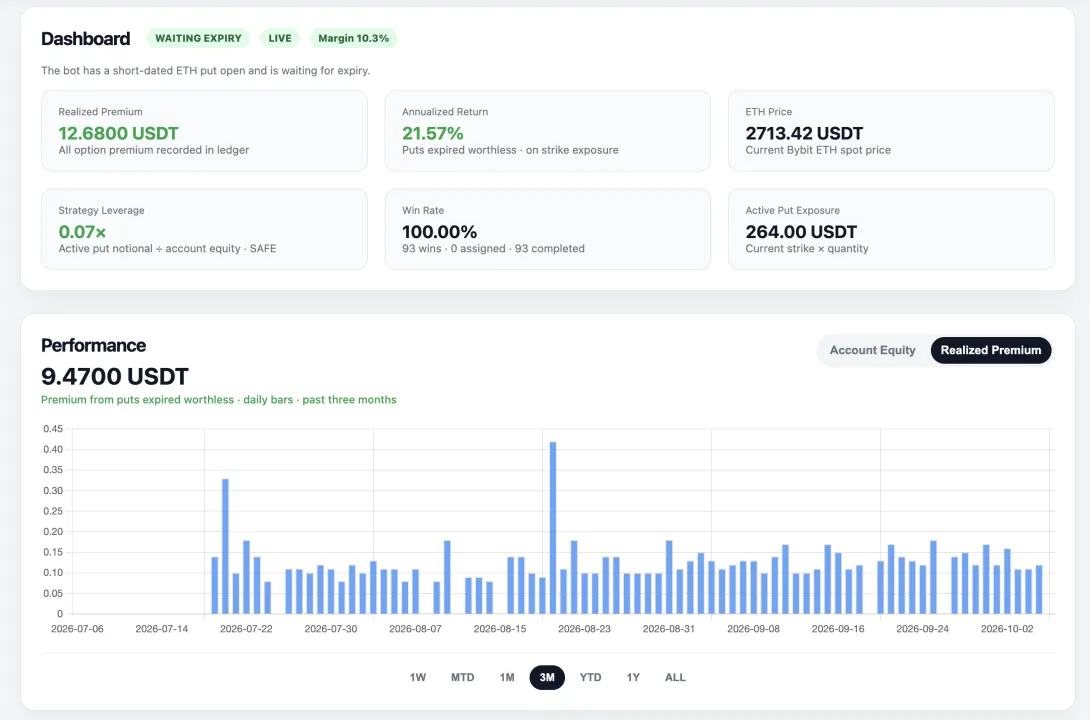
TerraM ETH Bot Update: From 1DTE Puts to a Spot-Backed Wheel Strategy
The TerraM ETH bot was built around a simple premise: sell short-dated ETH puts only at strikes we are prepared to accept as an ETH entry level. An in-the-money expiry was never meant to be treated as a strategy failure. If we are willing to sell an ETH put at a particular strike, we should also be prepared to own ETH around that level and continue managing the position.
The 1DTE put engine was already workingThe original 1DTE put-selling loop has been working in production. The bot scans Bybit ETH options for qualifying short-dated puts, applies its delta, premium, spread, and…
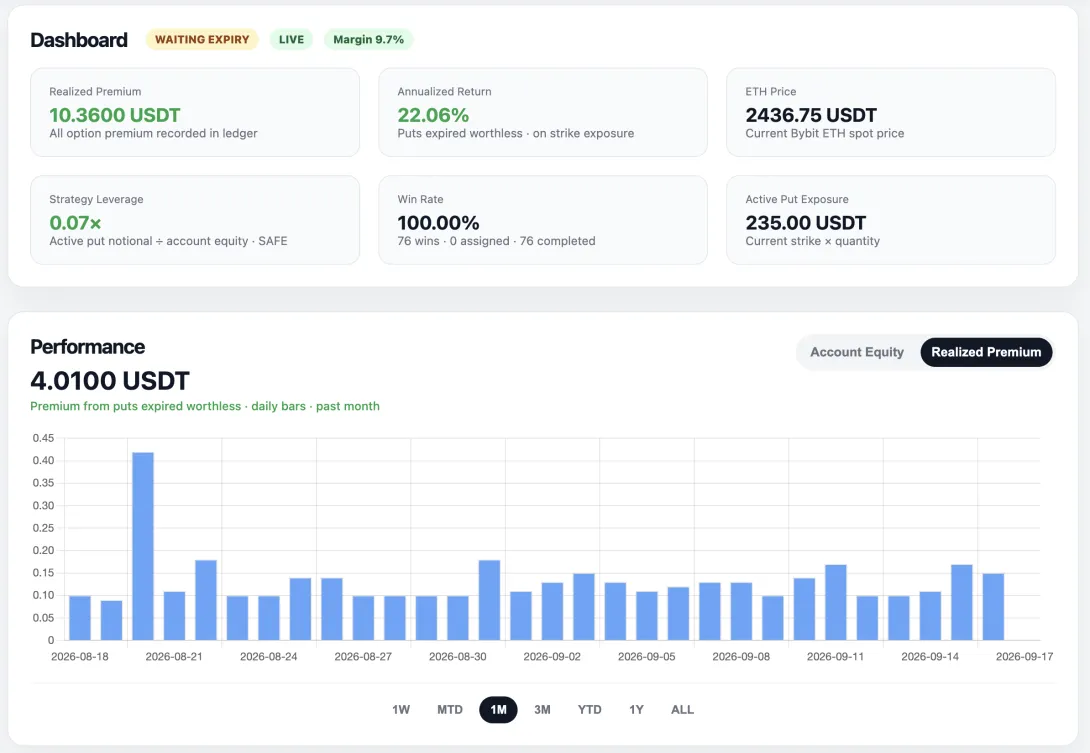
How to Connect TerraM Bot to Bybit for the Ethereum 1 DTE Strategy
We are opening access to the TerraM Bot, our automated interface for running the TerraM Ethereum 1 DTE options strategy on Bybit.
The idea is simple: you keep your funds inside your own Bybit account, connect the bot through a Bybit API key, and let TerraM handle the execution logic for the strategy.
The bot does not hold your funds and does not require you to transfer your trading capital to TerraMatris.
Access costs 10 TerraM per month.
This is an early-access product and is provided as is. It is intended for users who understand crypto options, Bybit…
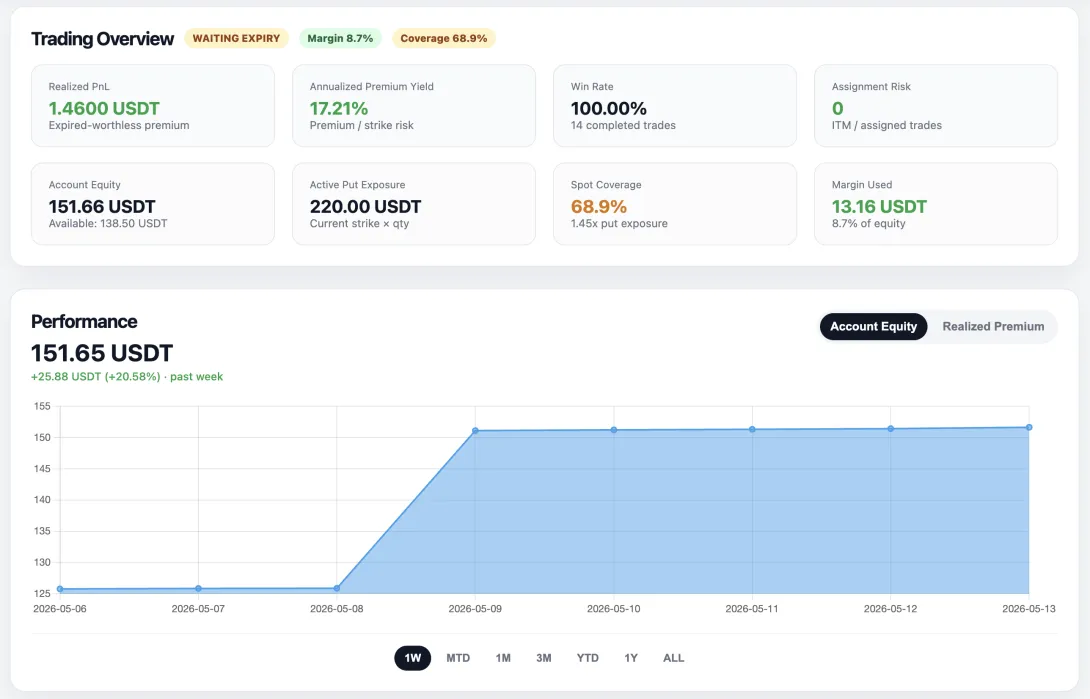
Fine-Tuning ETH Options Bot: Adding RSI-Based Assignment Logic
After two weeks of live testing and iteration, we made another meaningful upgrade to our algo trading bot.
For the past 14 days, the Terramatris ETH options engine has been running continuously in production, managing short-duration ETH put strategies on Bybit.
So far, results have been encouraging: the bot has maintained a 100% win rate during the initial live testing period while automatically managing expiries, scanning new opportunities, rolling winning positions forward, and tracking performance metrics in real time.
But despite the strong early performance,…
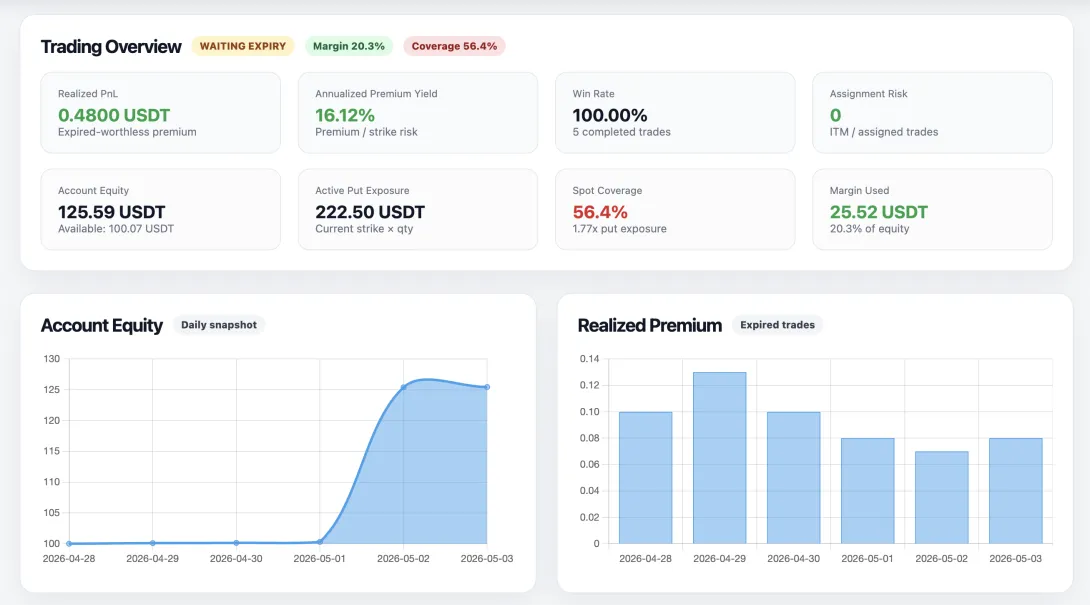
Backtesting Ethereum: How Often Does ETH Drop 5% in a Day?
While working with the TerraM trading bot, I conducted a backtest to quantify the frequency of significant daily drawdowns over the past 365 days (May 4, 2025 – May 3, 2026). Specifically, I analyzed how often the daily price change exceeded -5% or more. The results are notable.
The dataset is based on historical price data sourced from CoinMarketCap, with calculations performed in Google Sheets. Daily performance was measured as the percentage change between the open and close prices.
Out of 365 trading days—reflecting the continuous nature of crypto markets—194 days closed…